Dental malocclusion is a condition in which the upper and lower teeth do not fit together properly when the jaw is closed, causing an irregularity in the alignment of the teeth. This condition can affect not only the aesthetic appearance of the smile, but also the chewing function and general health of the mouth. In this article, we will explore the causes, effects, and treatment options for dental malocclusion.
Causes of Dental Malocclusion
The causes of dental malocclusion can be multiple and include:
Genetic Factors: Genetic predisposition can influence the shape and size of the jaw and teeth, contributing to malocclusion.
Developmental Anomalies: Problems during fetal or infant development can lead to malocclusions, such as overgrowth or undergrowth of the jaw.
Bad Habits: Thumb sucking, pacifier sucking or other harmful habits can alter the development of teeth and cause malocclusions.
Trauma: Injuries to the jaw or teeth can alter the alignment of the teeth and cause malocclusions.
Premature Loss of Baby Teeth: Premature loss of baby teeth can affect the development of permanent teeth and cause malocclusions.


Effects of Dental Malocclusion
- Difficulty in chewing and speaking.
- Increased risk of tooth decay and gum disease due to difficult cleaning of teeth.
- Muscle and joint pain, such as TMJ syndrome, due to additional stress on the jaw muscles.
- Cosmetic issues that can affect self-esteem and confidence.
Treatment Options for Dental Malocclusion
Orthodontic Braces: Orthodontic braces, such as traditional metal braces or clear aligners, can correct the alignment of your teeth through gradual push and pull.
Tooth Extractions: In some cases, tooth extractions may be necessary to create space and allow the teeth to align properly.
Orthognathic Surgery: In more severe cases of malocclusion, orthognathic surgery may be recommended to resize or reposition the jaw.
Prosthetic Rehabilitation: In some cases, it is possible to use dental prostheses, such as bridges or crowns, to correct malocclusion and restore chewing function.

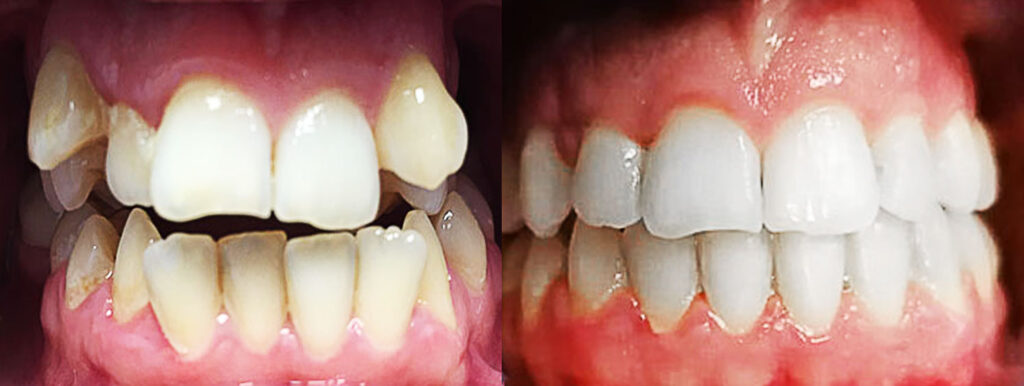
Dental malocclusion is a common condition that can affect the health and function of the mouth. It is important to consult a dentist or orthodontist if you suspect you have a malocclusion, in order to evaluate the most appropriate treatment options. With proper diagnosis and timely treatment, you can improve your teeth alignment and overall oral health.