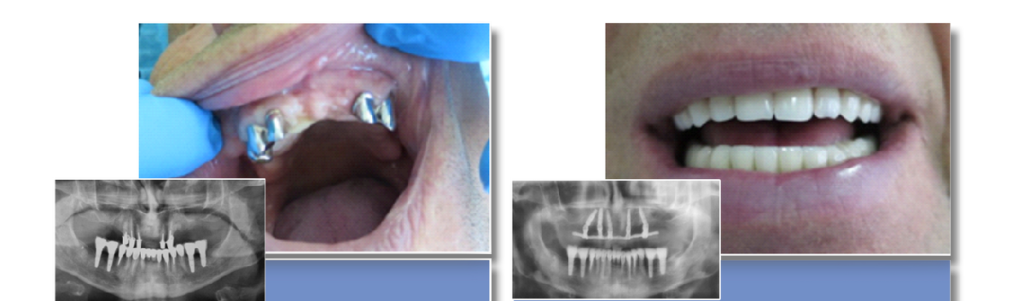
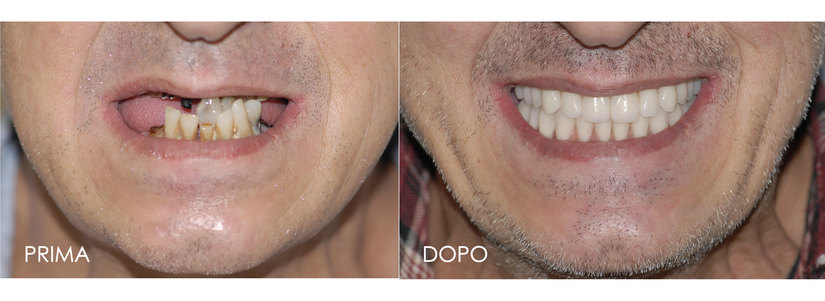
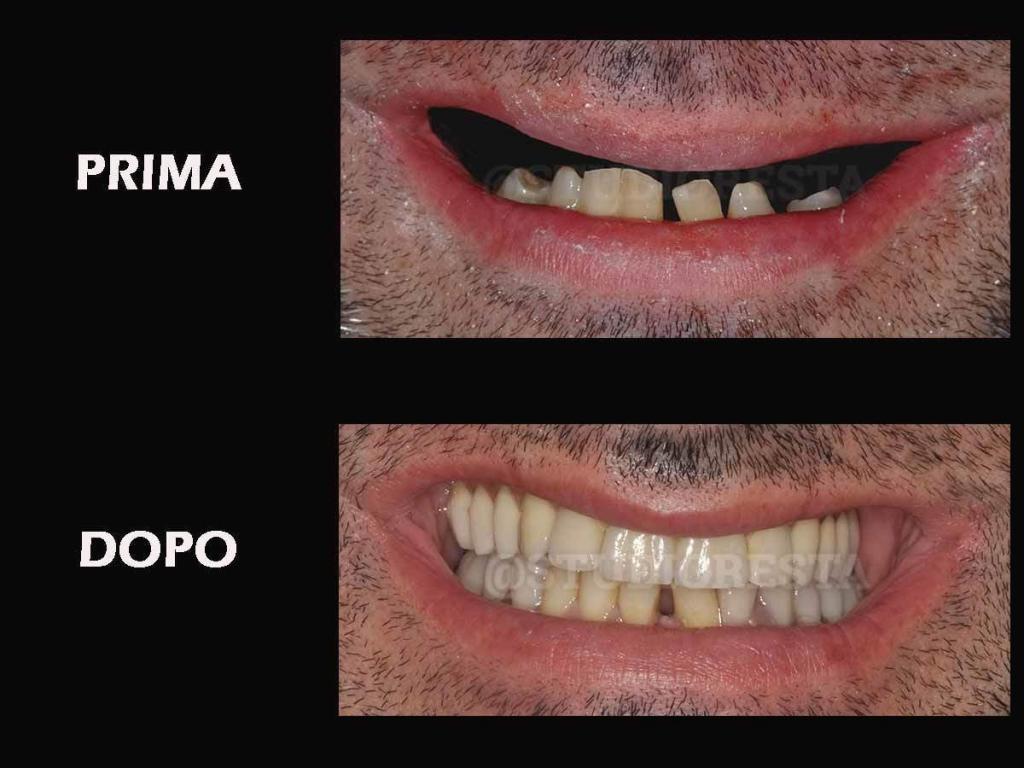
Dental Implants
Dental implants consist of three main components:
- the implant: a screw made of titanium or similar alloy that is inserted into the maxilla or mandibular bone to replace the root of the missing tooth;
- the abutment (or abutment): it is a structure that is fixed above the implant and acts as a connection between the implant itself and the crown or prosthesis;
- the crown or prosthesis: this is the visible part of the implant, designed to resemble a natural tooth. It can be made of ceramic or other dental materials.
The advantages
Compared to traditional removable prostheses, i.e. dentures, the dental implant offers several advantages. Indeed:
- It prevents the loss of bone tissue that can occur when a tooth is missing and the area is not stressed by chewing;
- It is stable and does not move, allowing you to eat and speak without problems;
- The chewing force is the same as natural teeth;
- It does not irritate the gums like traditional dentures;
- The patient gains self-esteem and confidence.
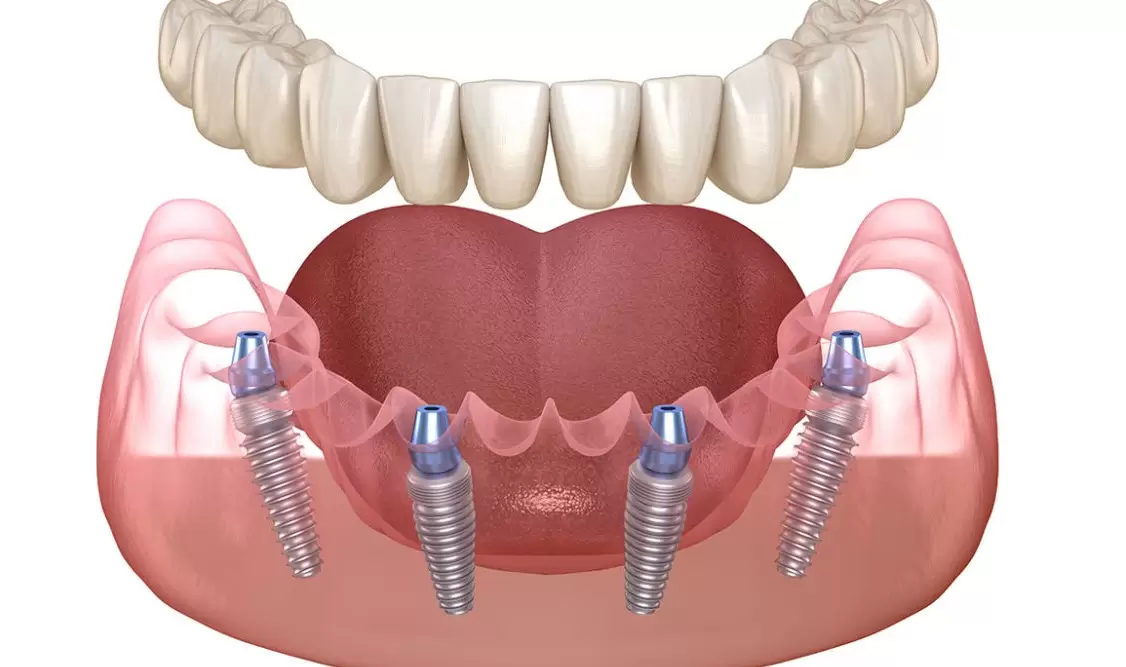
All on 4
All on 4 can create a full set of teeth using just four implants in each jaw. The feasibility of this depends on your specific jaw and circumstances. Once we evaluate your current teeth, the level of damage, as well as the structure and health of your jaw, we can determine if an All on 4 implant is the right choice. This surgical procedure uses eight implants, four in the upper jaw and four in the lower jaw, to support permanent dentures or crowns.
All on 6
All on 6 refers to the surgical implantation of six implants in the upper and lower jaw. The two additional all-on-4 dental implants may be necessary to provide stability and strength in your mouth, increasing the chances of success of your new permanent denture. For those patients where tooth decay in the jaw bone is a problem, the all on 6 dental implant offers additional strengthening and stimulation to the jaw bone. Our expert dentists will advise you on what is best for your needs.
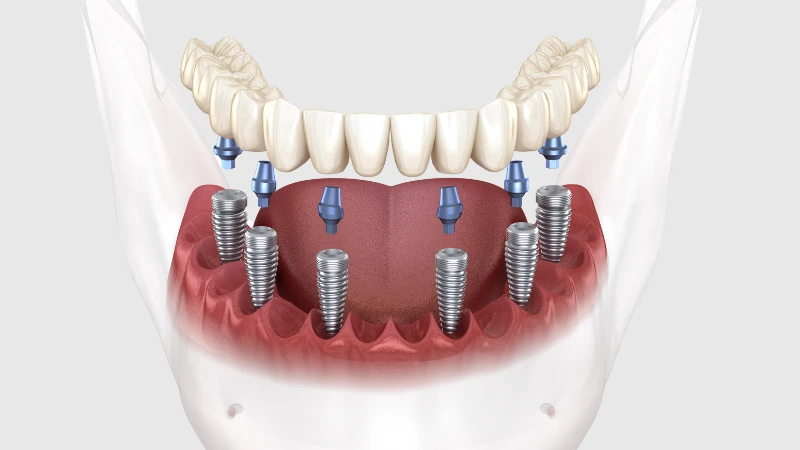
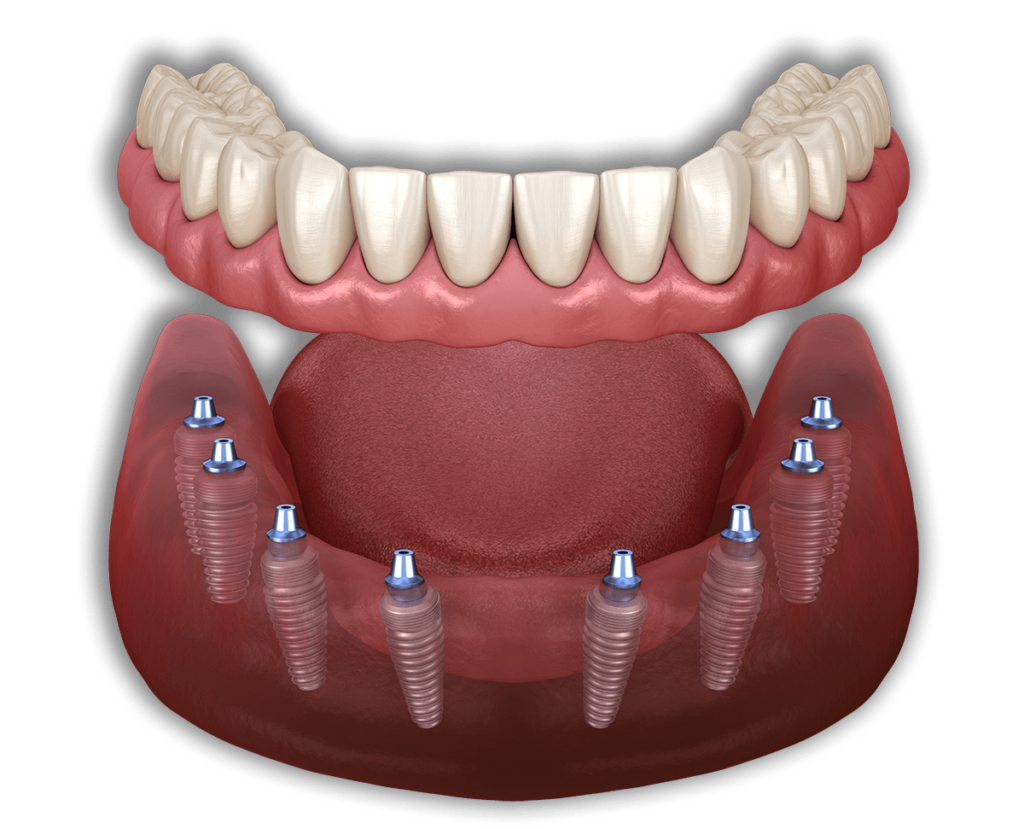
All on 8
All 8 dental implants are used in patients who require increased security of their full-arch implants. This could be due to poor jaw density, irregular shape of the mouth, or any other problem found by the dentist.
Is it painful to place an implant?
The perception of pain during the procedure of inserting a dental implant can vary from person to person and depends on several factors, including individual sensitivity to pain, the complexity of the procedure, and the use of anesthesia or sedation. In general, many patients experience only mild or moderate discomfort during the implant insertion phase. Usually, the dentist or implant surgeon uses a local anesthesia to numb the area where the procedure will be performed. This means that, during surgery, the patient should experience only light pressure or movement without pain.